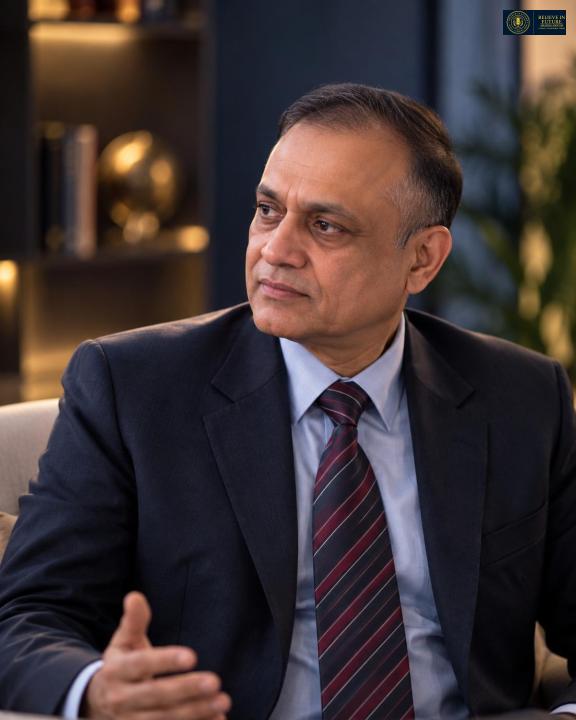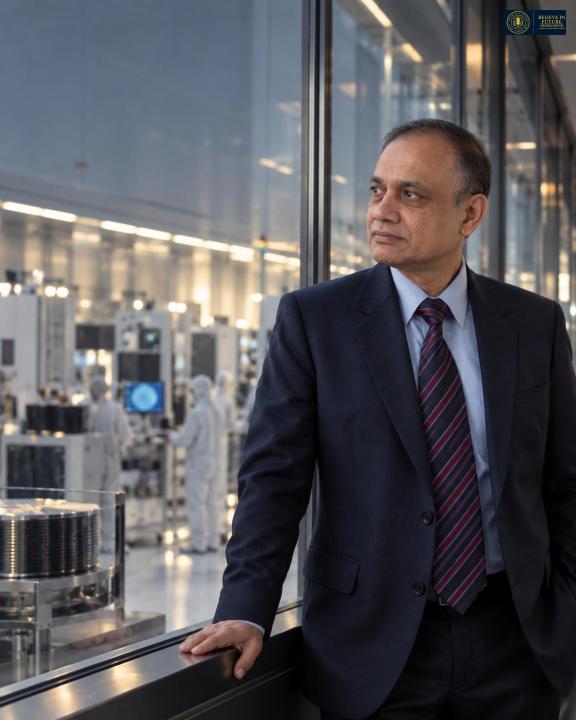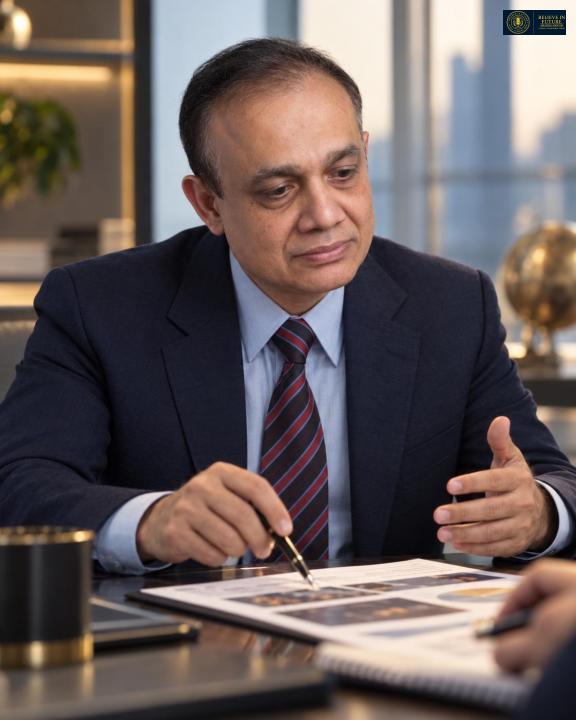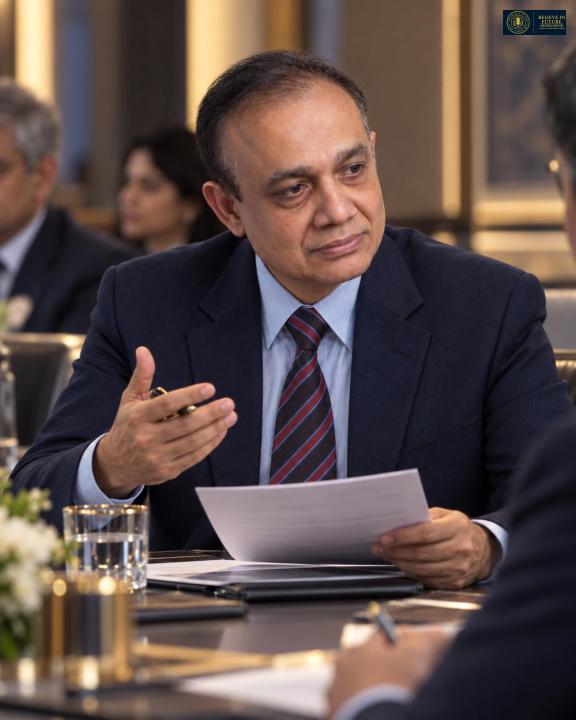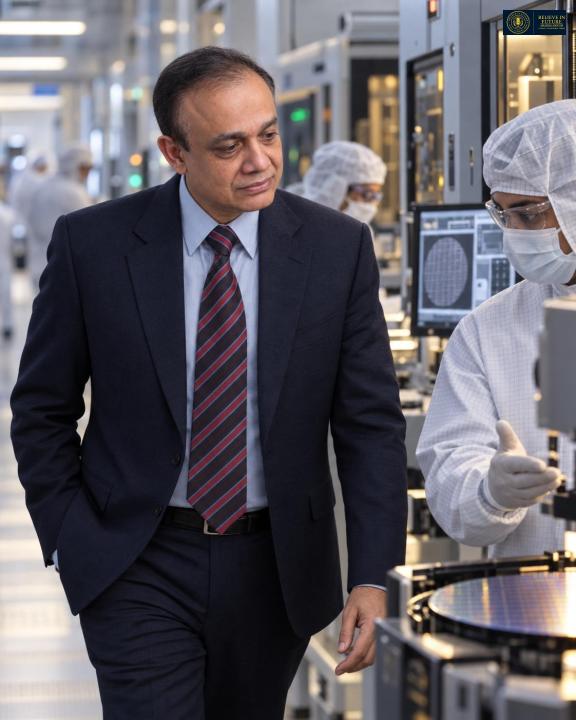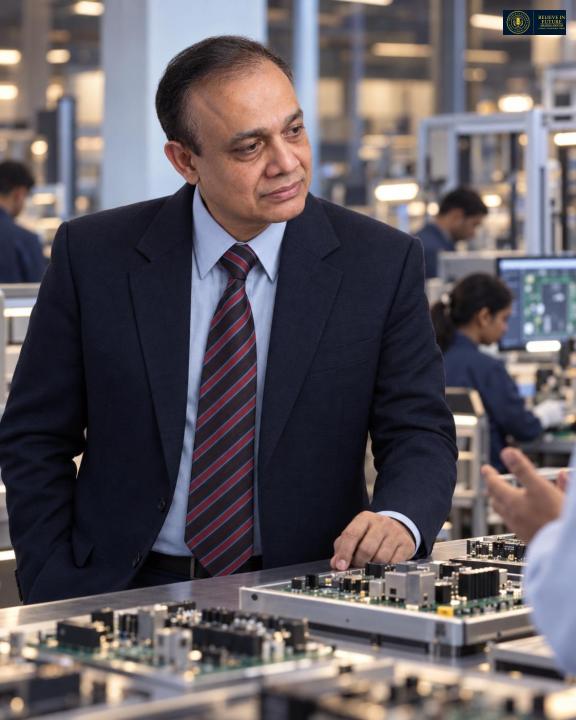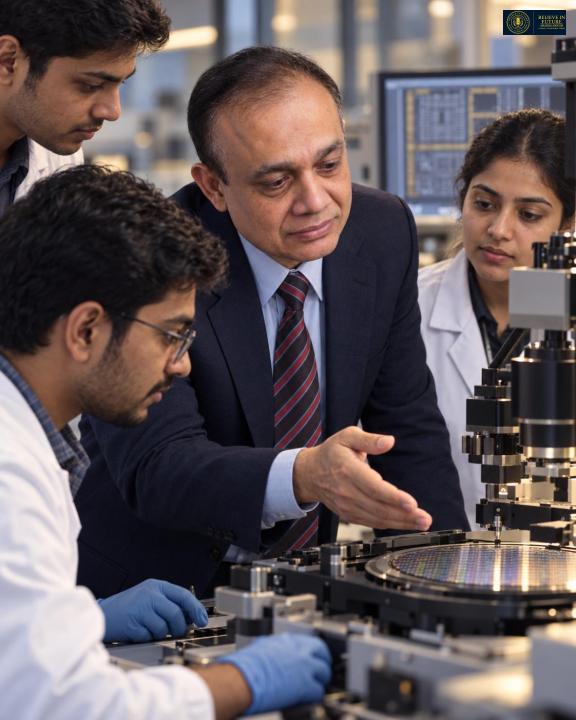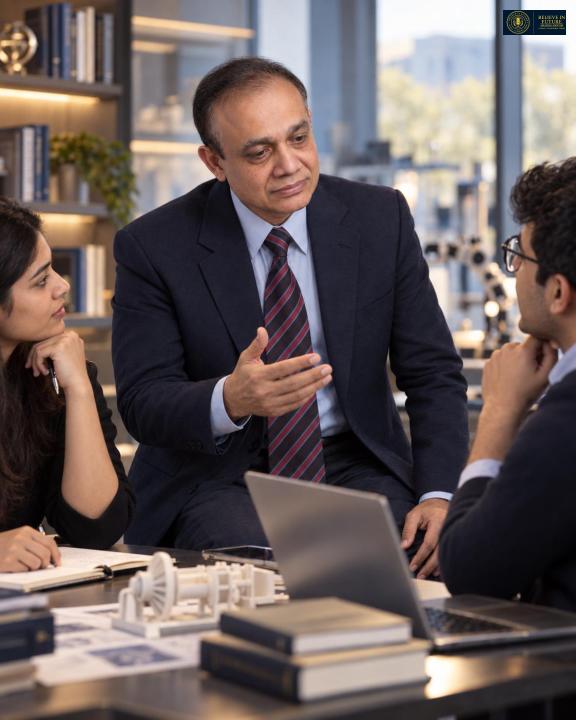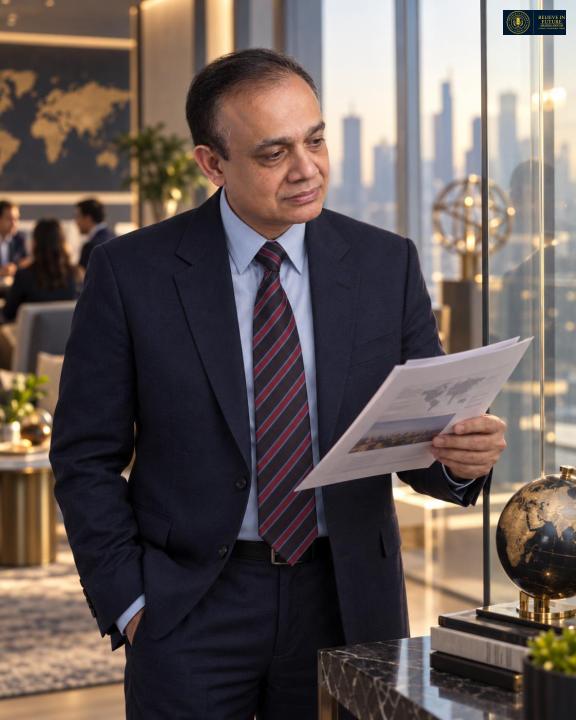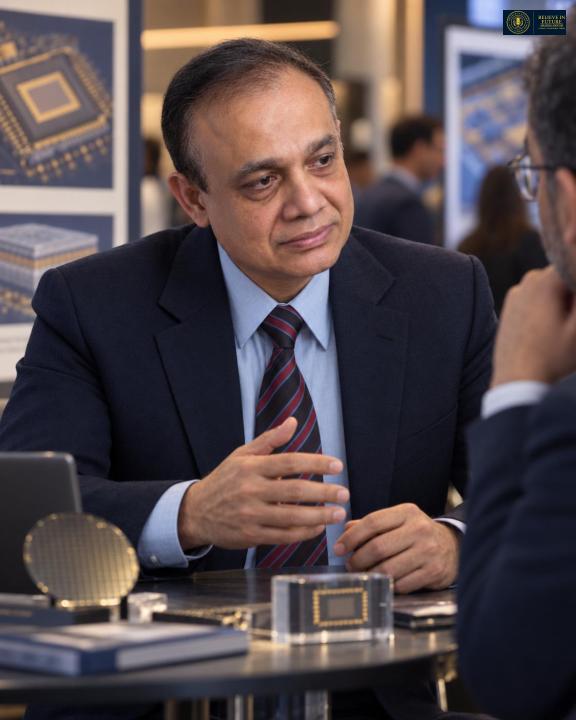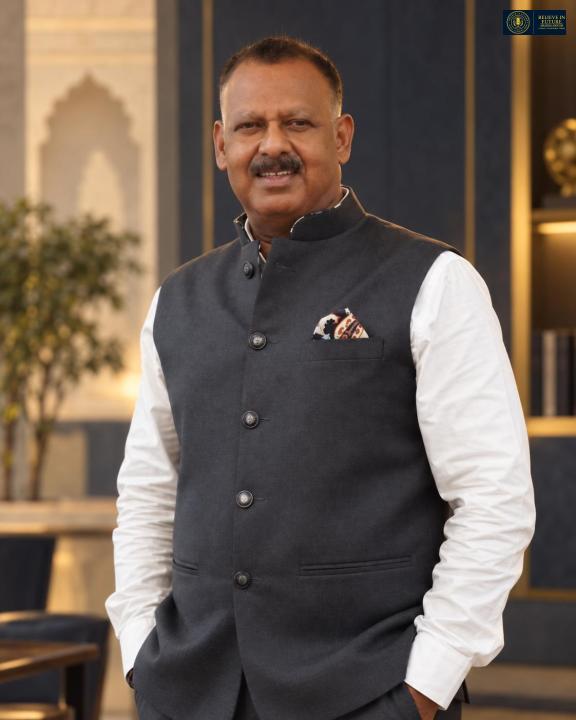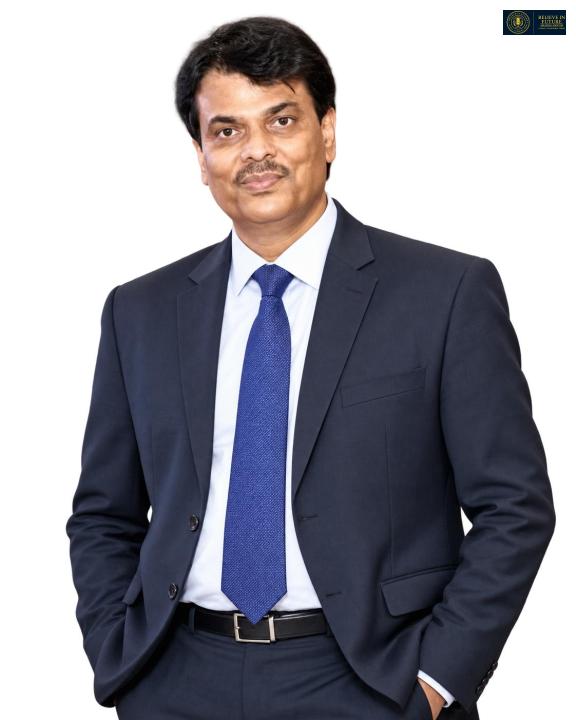

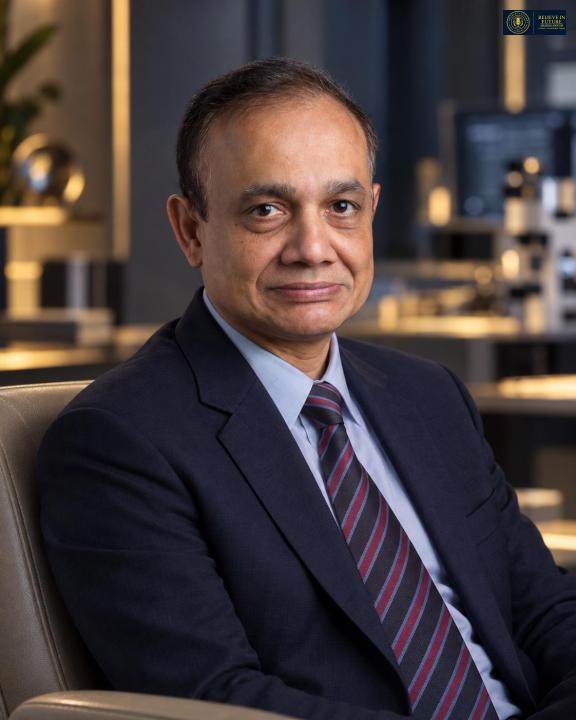

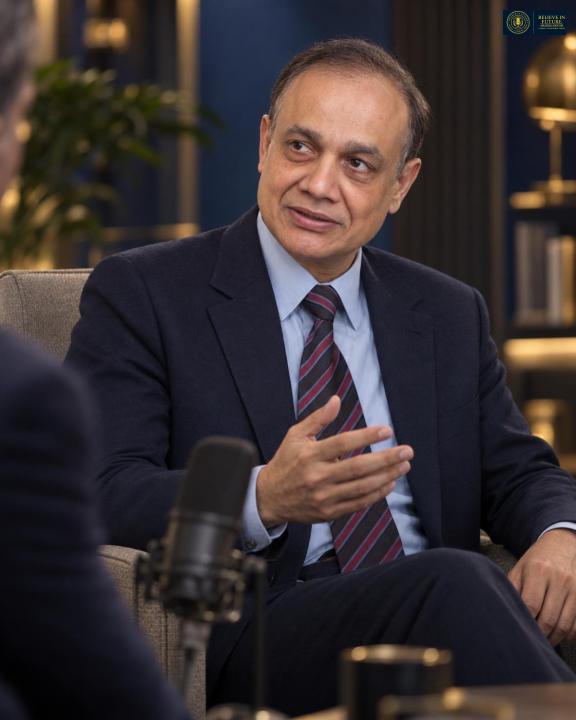
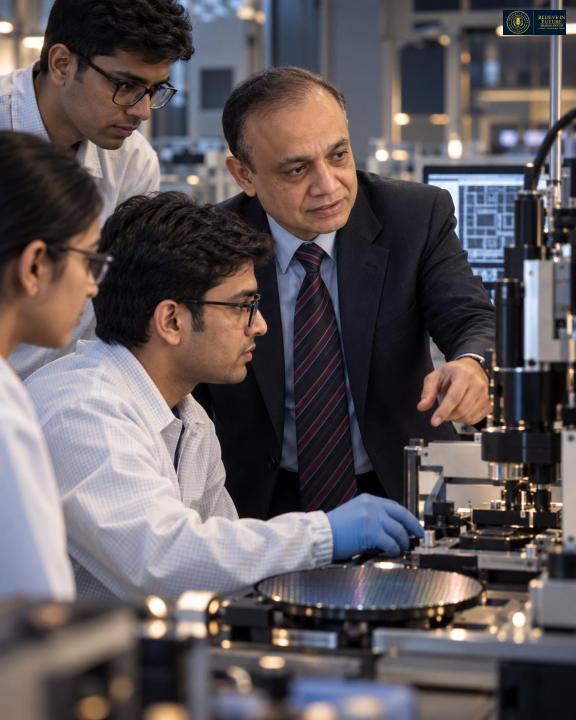
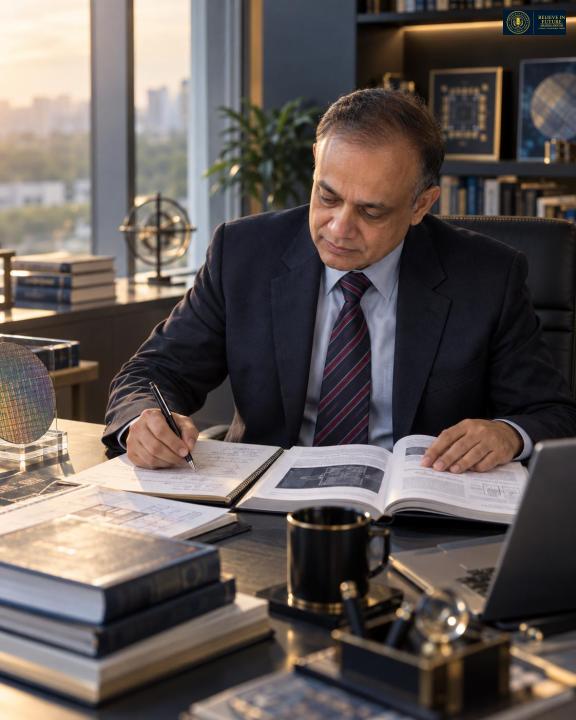
Dr. Ashwini K. Aggarwal is a technology-industry veteran, educator and semiconductor ecosystem leader with more than four decades of experience across electronics, semiconductors, market development, government affairs, skill development and technology policy.
His professional journey includes 18 years with Hewlett-Packard, strategic leadership assignments across the technology industry, and a significant tenure with Applied Materials India, where he served as Director of Government Affairs before retiring in August 2024. His work at Applied Materials covered public policy, programmes and market-development initiatives across semiconductors, displays, electronics and solar technologies.
Today, Dr. Aggarwal serves as Chair of the Semiconductor Skill Committee at the Electronics Sector Skills Council of India (ESSCI) and as Professor of Practice at Manav Rachna International Institute of Research & Studies. He has contributed to National Occupational Skill Standards and semiconductor-manufacturing skill development, while helping strengthen collaboration between academia, government and industry.
He is an IEEE Senior Member, Founder Chair of the IEEE Electronics Packaging Society Delhi-NCR Chapter and a Fellow of the Institution of Electronics and Telecommunication Engineers. His post-Applied Materials engagements have also included advisory and consulting work with organizations and technology companies in India and internationally.
A defining element of his journey is his commitment to lifelong learning. Even after decades of industry experience, he continued formal study in electronics, VLSI and semiconductors—reinforcing a belief that leadership is not about knowing everything, but remaining willing to learn.
Through his work in semiconductor skills, education and mentorship, Dr. Aggarwal is helping address one of India’s most important technology challenges: building the human capability required to convert semiconductor ambition into sustainable industrial strength.
Dr. Ashwini K. Aggarwal’s journey is defined by one rare quality: the willingness to remain a student even after becoming an industry veteran. Across more than four decades in technology, semiconductors, markets, policy and skill development, he has consistently worked at the intersection of ideas and execution — helping turn technological ambition into practical human capability.
The story begins with curiosity. Trained in physics and electronics, Dr. Aggarwal built a career that moved across technology, markets and industry strategy rather than staying within a single professional lane. His long tenure with Hewlett-Packard exposed him to the realities of technology adoption: a great product is never enough on its own. Markets have to understand it, people have to trust it, and ecosystems have to be built around it.
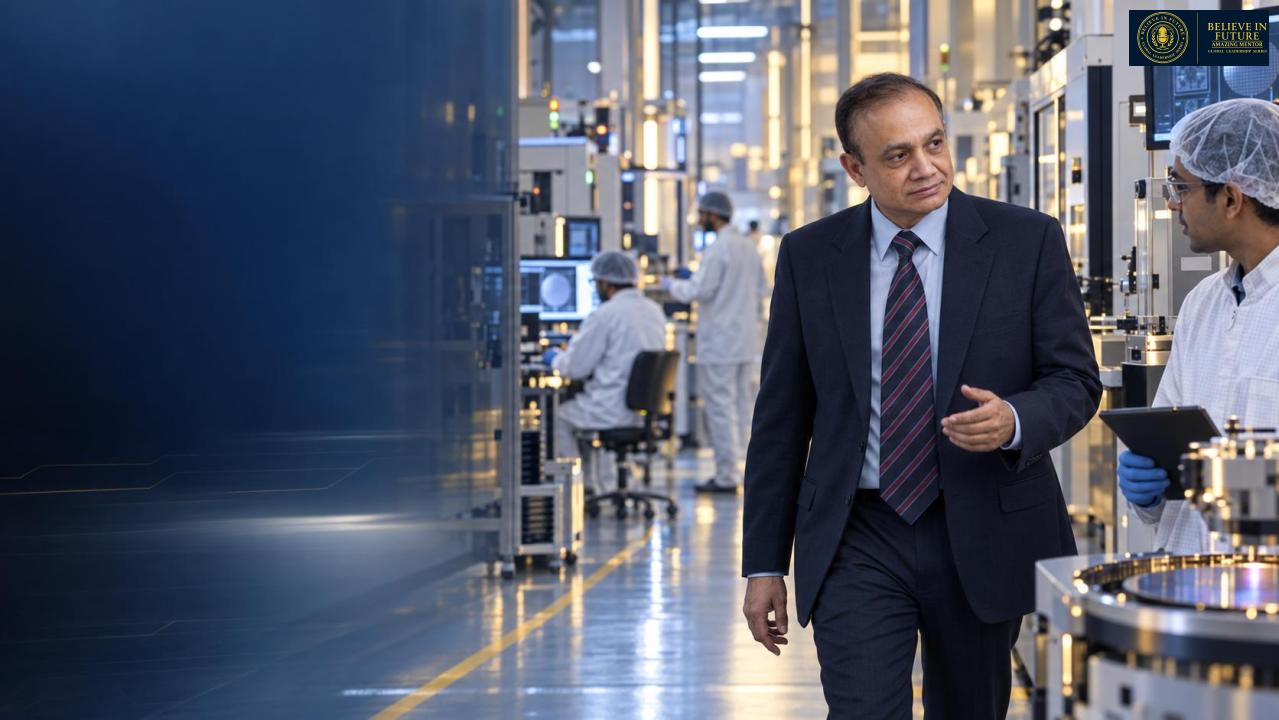
That ecosystem thinking eventually became central to his work in semiconductors. Rather than viewing the sector only through fabs, investment or design capability, he has repeatedly drawn attention to the people who must operate, maintain and scale advanced manufacturing environments. His writing has emphasised that semiconductor manufacturing requires a different skill set from design — and that practical training, process discipline and industry exposure are essential if India wants sustainable capability rather than headline ambition.
Perhaps the most revealing chapter came later in his career. At an age when many senior professionals rely primarily on accumulated experience, Dr. Aggarwal returned to formal education and completed an M.Tech in Electronics and Communications with a specialisation in semiconductors and VLSI. He described it as his fifth degree and, at 65, wrote that the milestone felt less like an ending and more like the beginning of another chapter.
Today, his work brings these threads together: technology, skills, education and mentorship. His leadership in semiconductor skill development reflects a broader belief that national technology ambitions are ultimately limited by human capability. Machines, factories and policies matter — but lasting ecosystems are built when knowledge is translated into skill, experience is transferred to younger people, and leaders remain curious enough to keep learning themselves.