Leadership Profile

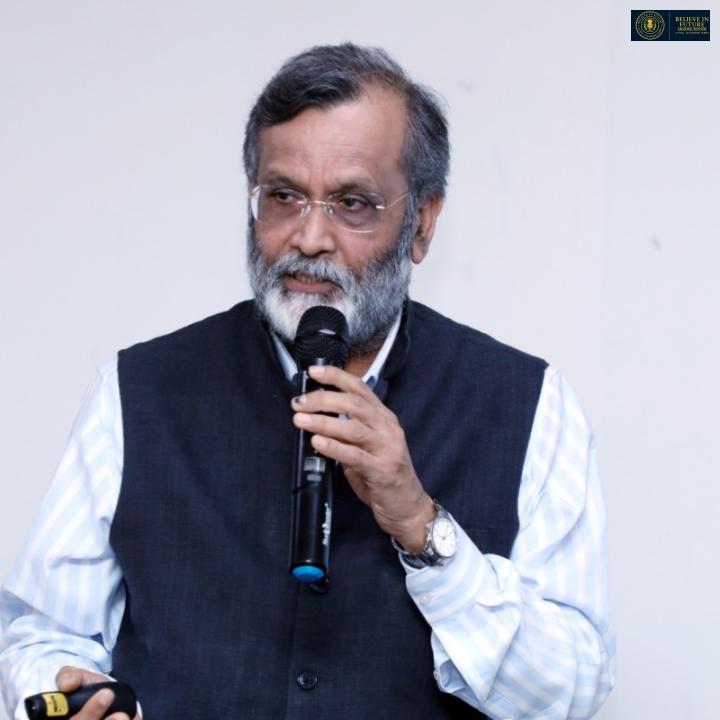
Dr. O. P. Mishra, IPS (Retd.) — Leadership Beyond the Uniform | Believe in Future

Retired IPS Officer · Security Strategist · Prison Reformer · Author · Public Speaker

Policing Leadership Security Strategy Prison Reforms Community Policing Public Safety Ethics in Governance

Signature Quote

“Power without empathy creates fear. Authority with integrity creates trust.”

Documentary Player

The Cinematic Interview

Video will appear once interview media is configured in the profile.

Stage One

Teleprompter Scripts

Host
Host
Dr. O. P. Mishra, IPS (Retd.) — Leadership Beyond the Uniform | Believe in Future
Intro:
Welcome to Believe in Future – Amazing Mentor, Global Leadership Series. I’m your host, Gaurav Garg. Today we have a very special guest – Dr. O.P. Mishra, IPS (Retired). Dr. Mishra is a 2002-batch IPS officer from the AGMUT cadre. He’s known as an ace investigator and effective strategist, and has spent over 36 years protecting cities and their people.
He’s led security for events from the Commonwealth Games 2010 to the 2023 G20 summit right here in Delhi. As an academic too, he authored Policing Delhi: Urbanization, Crime and Law Enforcement (Oxford Univ. Press). Dr. Mishra, welcome to the show.


Questions:
Q1To start, tell us a little about your journey into policing. What first drew you to become an IPS officer?
Segment 1 – Roots of Service (Reflective):
Q2 Dr. Mishra, you’ve mentioned that even as a student you were drawn to public service. Growing up, was there a defining moment or person who inspired you to pursue a career in the police?

Q3 You earned a Ph.D. in sociology from Jawaharlal Nehru University. How did studying society on a scholarly level influence your decision to join the force?

Q4 Can you share a story from your early days on the job that really cemented your sense of purpose as an officer? Perhaps something from your posting in Delhi in the early ’90s. For example, as ACP of Greater Kailash, you confronted terrorists in 1992 – what do you remember from that experience, and how did it shape you?

Segment 2 – Securing the City: Mega-Event Mastery (Analytical):
Q5 Over your career, you’ve overseen security for some of India’s largest events. The 2010 Commonwealth Games, a SAARC summit, and most recently the Delhi G20 summit. Walk us through that world – how does one plan security for a city hosting so many VIPs and dignitaries? What steps do you take months in advance?

Q6 What was one unexpected challenge during these high-pressure events? (Perhaps a surprise threat, or a technical glitch.) Can you tell us the story of how you and your team handled it?

Q7 (curious) During the G20 summit in New Delhi, you were overall in charge of security at the main venue. What did you learn about leadership when the world’s leaders are in your city? What advice from those experiences can leaders in any field take away?
Segment 3 – Guardians of the Community: Policing & Reform (Visionary):
Q8 Another side of your career is in community policing and prison reform. You developed Delhi Police’s Neighborhood Watch scheme. What inspired that initiative, and how did it change community trust in policing?
Q9 Your sociology background must have given you unique insight. How do you balance law enforcement with understanding people’s backgrounds and social issues?
Q10 You also took charge of prisons as IG in Chandigarh. Why does reforming prisons and helping inmates matter so much to you? Can you share a story where a rehabilitation effort had a surprising impact on someone?
Segment 4 – Blue Line & Grey Areas: Controversies in Policing (Bold):
Q11 Policing can be controversial, with debates about force vs. rights. Some critics say the police are too heavy-handed; others say not proactive enough. How do you respond to these concerns?
Q12 What’s a common misunderstanding that civilians have about the police? How can leaders like yourself bridge the gap of trust?
Q13 Have you ever faced an ethical dilemma on duty where the rules weren’t clear-cut? How did you navigate that situation, and what did you learn about decision-making under pressure?
Segment 5 – Wisdom from the Force: Advice & Mentorship (Inspiring):
Q14 Dr. Mishra, you’ve redefined what it means to be a modern police officer – combining action and academics. What is one key piece of advice you give to young officers or any future leader?

Q15 When you look back on your career, what principle guided you the most? Is it discipline, empathy, integrity, or something else?

Q16 How important is continuous learning in policing? (After all, you’ve written books and articles – what is the role of knowledge for a field commander?

Q17 Finally in this segment, can you share one human moment — maybe a lesson you learned when mentoring a junior colleague, or from someone on your team? Something humble or funny that taught you something.
Segment 6 – Policing Tomorrow: Vision for the Future (Reflective):
Q18 As we wrap up, tell us what you see on the horizon. How will technology and society shape the future of policing? What innovations excite you – for example, predictive analytics, community apps, or better training?

Q19 And how can citizens and police work together to create safer, more trusting communities in the next decades?
Q20 Finally, what message would you like to leave for the next generation?

Outro:
Thank you, Dr. Mishra, for sharing your journey and truth. You remind us that leadership is about purpose, not position. This was Believe in Future – Amazing Mentor, Global Leadership Series. Until next time — stay curious, stay kind, and always believe in the future.

Story

Leadership Narrative

Dr. O. P. Mishra is a rare blend of law enforcer and social thinker. Over three decades in the Indian Police Service, he has led from the front in crisis situations while quietly building systems rooted in trust, dignity, and reform.

Dr. Mishra’s career spans the full arc of public safety — from hard policing on the streets to strategic security planning at the national level. His leadership has been tested in moments of high risk and high visibility, where precision, restraint, and judgment mattered equally.

What sets him apart is not just authority, but reflection. With deep academic grounding in sociology, he viewed crime not merely as a legal problem, but as a social signal — something to be understood, prevented, and corrected with empathy as much as enforcement.

As a prison reformer, he worked to restore dignity to correctional systems, introducing initiatives that humanized incarceration and emphasized rehabilitation over punishment. As a senior police leader, he championed citizen-centric service delivery, transparency, and technology as tools for trust — not control.

Now retired from uniformed service, Dr. Mishra continues to mentor, advise, and speak — shaping conversations on ethical leadership, governance, and the future of policing in a democratic society.

Podcast

Listen to the Conversation

Podcast embed will appear when podcast links or audio are configured for this leader.

AI Mentor

Ask Dr. O. P. Mishra, IPS (Retd.) — Leadership Beyond the Uniform | Believe in Future

AI Mentor Session

Transcript-grounded guidance only

Welcome. Ask a leadership question and receive a context-grounded response.

Ready

Transcript Intelligence

Search the Conversation

Career Timeline

Defining Milestones

  1. 1987 – Early 1990s

    IPS Officer (Field Postings)

    AGMUT Cadre

  2. 1990s

    ACP / Senior Field Officer

    Delhi Police

  3. 2012 – 2014

    DIG

    Goa Police

  4. 2015 – 2017

    Additional Commissioner of Police (Operations)

    Delhi Police

  5. 2017 – 2019

    DIG / IG Prisons

    Chandigarh Administration

  6. 2019 – 2023

    Joint Commissioner of Police

    Delhi Police

Impact Map & Domains

Where Leadership Creates Change

Ethical Policing

  • Integrity-led decision making
  • Accountability in authority
  • Public trust as a security asset

Strategic Security

  • Large-scale event security
  • Risk assessment & planning
  • Crisis leadership

Prison Reforms

  • Rehabilitation over retribution
  • Inmate dignity & skills
  • Human-centered corrections

Community Engagement

  • Citizen-centric policing
  • Awareness & prevention
  • Police-community partnerships
  • New Delhi India Public Safety
  • Chandigarh India Prison Reform
  • Goa India Community Policing

Gallery

Visual Moments

Gallery visuals will appear when profile gallery media is added.

Awards, Books & Speeches

Recognition and Thought Leadership

Awards

Awards will appear when added in the profile data.

Books

Book references will appear when configured.

Speeches

Speech highlights will appear when configured.

Related Leaders

Continue the Leadership Journey

Testimonials

What Peers Say

Testimonials will appear when testimonial entries are configured in the profile.

Invite / Collaborate / Sponsor

Open a Strategic Conversation with the Believe in Future Team

Invite this leader, propose a collaboration, or explore sponsorship opportunities for upcoming interviews and platform initiatives.