SEGMENT 1 — BEFORE THE RISK MAP
Tone: Reflective / Personal
1. Viktor, what first attracted you to law enforcement and security? Was there a particular person, experience or belief behind that decision?
2. When you look back at the younger Viktor entering this profession, what did he misunderstand about security that experience later taught him?
3. Was there an early assignment when you realised that security was less about authority and more about responsibility?
4. Security professionals are trained to notice things that others overlook. Were you naturally observant as a young person, or did the profession teach you how to read situations and people?
5. Was there ever a difficult moment early in your career when you seriously questioned whether you wanted to continue? What made you stay?
6. If you could give the younger Viktor one sentence of advice before his first serious assignment, what would you tell him?
SEGMENT 2 — INTELLIGENCE BEFORE IMPACT
Tone: Analytical / Curious
7. The word “intelligence” can sound mysterious from the outside. What does risk intelligence actually mean when it is done properly — and what is it not?
8. Imagine I am a CEO and something simply does not feel right: a questionable partner, possible fraud, reputational risk or an emerging security concern. How do you move from suspicion, to information, to intelligence, to a decision?
9. Experience is valuable, but experience can also create bias. How do you stop yourself from saying, “I have seen this before,” and reaching a conclusion too quickly?
10. Can you share an anonymised example where the evidence forced you to change your original assumption?
11. We live in an age of almost unlimited information. What tells you that a source deserves belief — and what immediately makes you suspicious?
12. After almost three decades in security and investigations, are you harder to deceive than most people — or simply more aware of how easily all human beings can be deceived?
13. Finish this sentence: Good intelligence should reduce ________, not increase ________.
SEGMENT 3 — FROM BLUE LIGHTS TO BOARDROOMS
Tone: Story-led / International
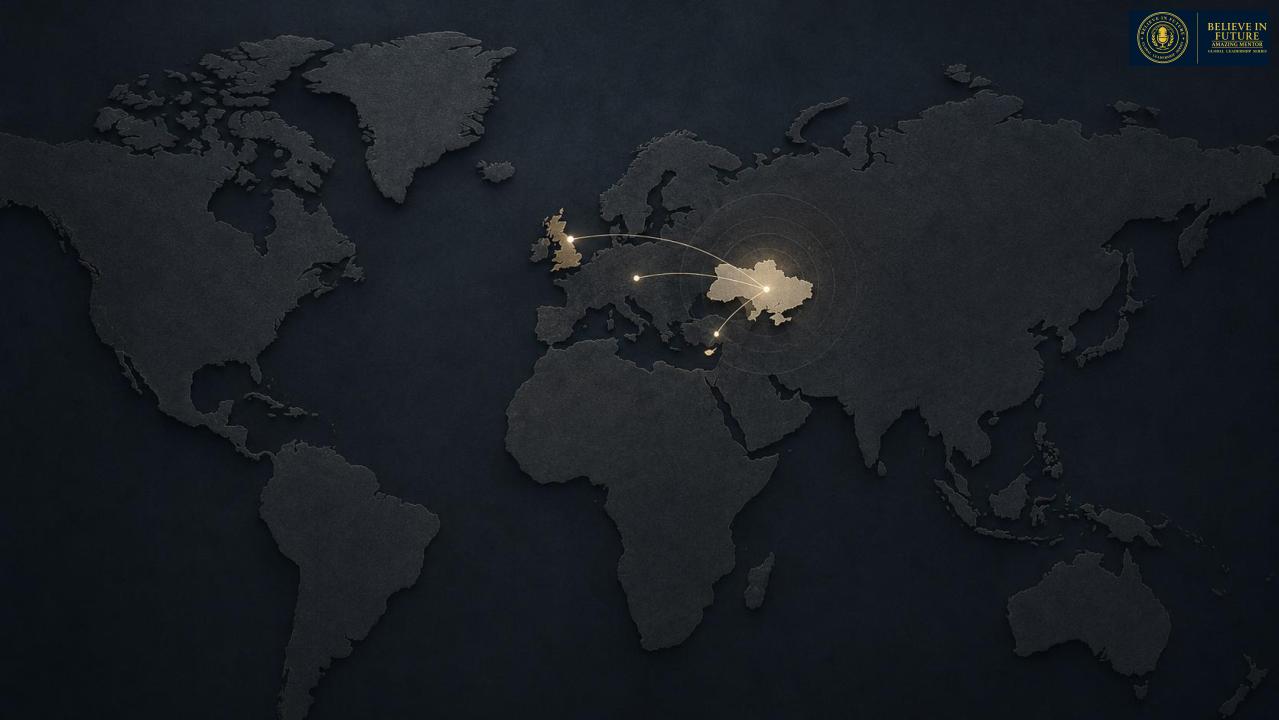
14. Your career has moved through law enforcement, Cyberpolice, international peacekeeping and corporate security. These look like very different worlds. What remained surprisingly similar across all of them?
15. You served as a Section Chief within Ukraine’s Cyberpolice Department. What did cybercrime teach you about the meaning of borders?
16. In the digital world, attribution can be extremely difficult. How cautious should leaders be before deciding who is responsible for an attack?
17. Your experience also included UNPOL and a United Nations peacekeeping environment in Cyprus. What did international peacekeeping teach you about cooperation between people who may see the same problem very differently?
18. Was there a moment when trust achieved something that authority could not?
19. When you moved more deeply into corporate security, what was the biggest mental adjustment from public-sector security to business leadership?
20. What do CEOs and boards misunderstand most about security? Do they spend too little, spend on the wrong things, or simply pay attention too late?
21. And on a human level — after analysing risk all day, can an investigator ever completely stop analysing the room when he goes home?
SEGMENT 4 — SECURITY OR SURVEILLANCE?
Tone: Bold / Respectful
22. Every organisation wants security, but almost nobody wants to feel watched. At what point does legitimate security become unacceptable surveillance?
23. Who should determine that boundary — security professionals, lawyers, boards, governments, employees or society itself?
24. There is an assumption that collecting more information always makes us safer. Do you agree with that, or can too much information actually make decision-making worse?
25. Artificial intelligence can identify patterns faster than any human team. Would you allow AI to make a consequential security judgement without a human being taking responsibility for the final decision?
26. Technology increasingly allows organisations to do things that were impossible only a few years ago. How important is the distinction between what we can do and what we should do?
27. Security professionals are often successful when nothing happens. But if nothing happens, people may believe the protection was unnecessary. How do you demonstrate the value of prevention?
28. What is one ethical line you personally believe a security professional should never cross, even if crossing it would make the job easier?
SEGMENT 5 — THE MENTOR’S BRIEFING
Tone: Warm / Practical
29. Imagine a 22-year-old tells you, “I want a career in security, intelligence or investigations.” What should that person learn first?
30. Which matters more at the beginning: technology, law, psychology, communication, analytical thinking or something else?
31. What important quality in this profession cannot really be taught in a classroom?
32. Young professionals now have AI systems capable of analysing information and finding patterns almost instantly. As machines become more capable, what human ability becomes more valuable?
33. Security can attract people who are fascinated by authority, confidential information and power. How do you recognise the difference between somebody who genuinely wants to protect people and somebody who simply wants power over them?
34. Tell me about a mistake that improved you as a leader. What happened, and what did it change?
35. When you mentor younger professionals, what behaviour makes you think, “This person may become a real leader”?
36. Complete this sentence: Before you lead other people, learn to ________.
SEGMENT 6 — NO TIME TO OVERTHINK
Truth & Dare / Rapid Fire
Tone: Playful
Gaurav:
Viktor, we have spent a lot of time analysing risk. Now I’m removing your analysis time.
Short answers. Instinct only.
37. Intelligence or instinct?
38. Prevention or response?
39. Technology or human judgement?
40. Morning person or night person?
41. What is the first thing you notice when you enter a room?
42. One cybersecurity habit everyone should adopt immediately?
43. Easier to read: criminals or executives?
44. Have you ever been completely wrong about someone?
45. Do your friends hate playing bluffing games with you?
46. Perfect information ten minutes late — or 80 percent of the information right now?
47. What worries you more: an obvious enemy or an invisible vulnerability?
48. Most underrated leadership quality?
49. One personal habit you would like to improve?
50. What is harder: protecting confidential information or keeping a surprise birthday secret?
51. If you had never entered security, what career might Viktor Drobotenko have chosen?
TRUTH:
52. What is one assumption people make about security professionals that annoys you?
DARE:
53. You have twenty seconds. No security terminology, no intelligence terminology and no corporate language. Explain your job as though you are explaining it to a ten-year-old.
SEGMENT 7 — RESILIENCE IS THE NEW ADVANTAGE
Tone: Visionary / Hopeful
54. For decades, security often meant trying to keep threats outside. Today, threats can arrive through software, information, supply chains, people or technology. Is resilience becoming more important than protection alone?
55. What security challenge do you believe organisations around the world are still underestimating?
56. Cybercrime and AI-generated deception are evolving rapidly. What threat are business leaders preparing for too slowly?
57. And what threat receives too much attention — something dramatic that may distract leaders from more ordinary vulnerabilities?
58. If you were advising the board of a major international company today, what three questions would you insist they ask about resilience?
59. We have talked a lot about risk. But this programme is called Believe in Future. What gives you confidence about the future?
60. After everything you have seen across law enforcement, security, technology and international cooperation, has your belief in people become stronger or weaker?
FINAL SIGNATURE QUESTION:
61. Viktor, I ask every Amazing Mentor one final question.
What message would you like to leave for the next generation?