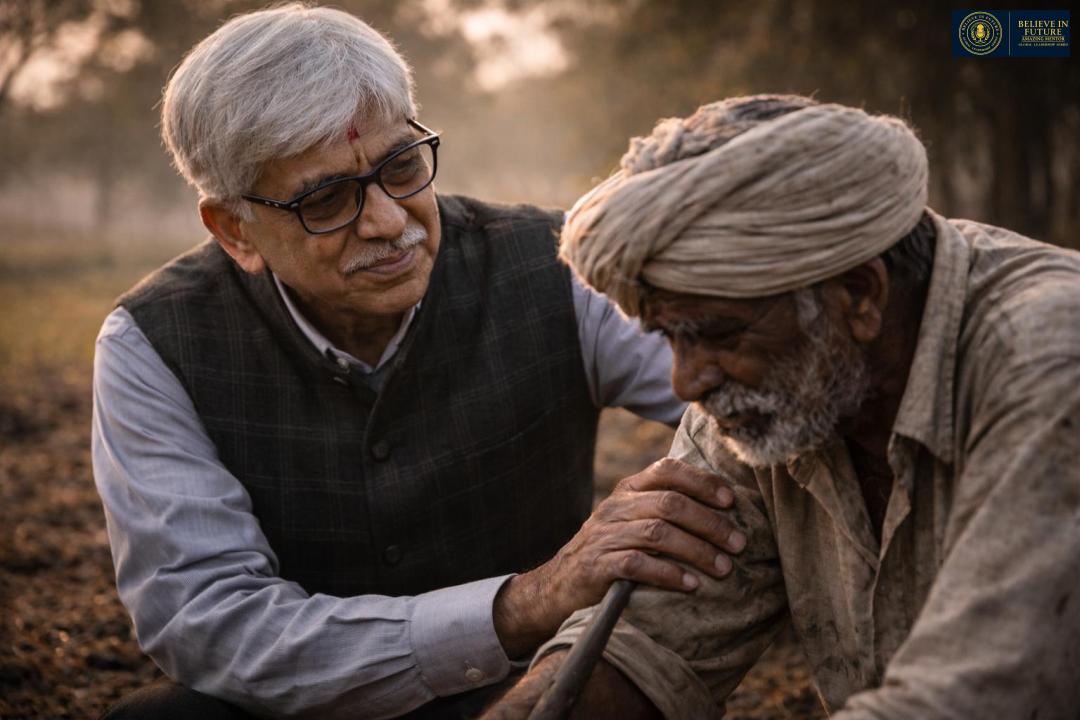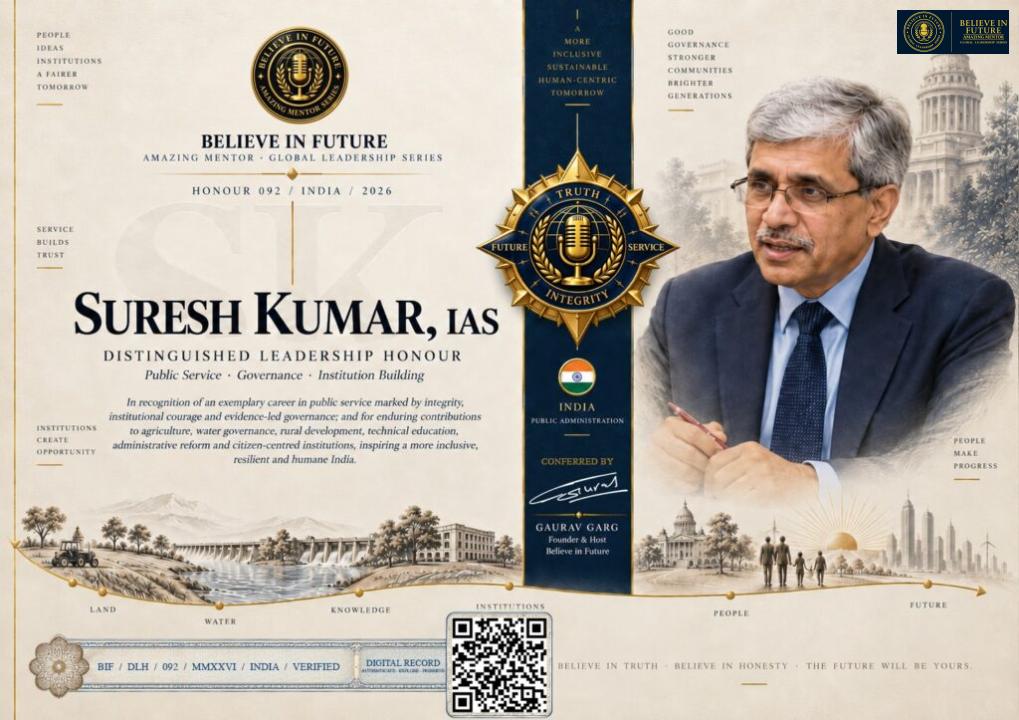







From the early days of his administrative journey, Suresh Kumar stood out for his ability to see the bigger picture. Whether managing rural subdivisions or navigating complex state machinery, he approached governance not as a series of departments, but as an interconnected system. This mindset allowed him to spearhead initiatives that changed the lives of millions — from designing Punjab’s visionary State Water Policy to advancing long-term agriculture diversification during a time when the state needed a new path forward.
As Chief Principal Secretary, he became the architect behind several statewide reforms. His work in drinking water, sanitation, energy, irrigation, and rural infrastructure reflected a commitment to solving problems at the root. Under his leadership, Punjab accelerated access to clean water, strengthened village-level institutions, and laid the foundation for large-scale sustainability programs. His reforms were not just administrative — they were human-centric, grounded in listening to communities and ensuring real, measurable outcomes.
Beyond India, Suresh Kumar’s influence extends to international platforms. As an International Policy Fellow at the University of Cambridge, he contributed to global dialogues on agricultural resilience, climate adaptation, and rural development. His advisory role in the TIGR2ESS Project strengthened the bridge between scientific research and policy action, proving that evidence-backed governance is essential for future-ready societies.
Throughout his career, he remained known for his clean image, disciplined approach, and calm leadership even in politically charged environments. He stood firm on principles, upheld transparency, and championed collaboration between bureaucrats, researchers, and policymakers. His journey shows that real transformation demands not only intelligence and strategy, but also patience, ethics, and lifelong learning.